Saturday, 27 May 2023

Name Calling

 
Taxi drivers always have trouble in those countries where they change the names of things. Prithee take me to such and such on the 'General Mola' became the day after Franco keeled over, please take me to the 'Principe de Vergara'. The General was an old mate of the Spanish führer's and no one can remember who on earth the Prince was.

Somebody nice, no doubt.

Name changes in Spanish streets, public buildings and so on are indescribably popular, especially when there's nothing better to do. No doubt President Sánchez is working hard on this. Well, with all the current efforts to remember or honour certain parts of the ghastly Civil War of 1936 to 1939, we know he is.
 
Even the famous mausoleum with the gigantic stone cross - the Valle de los Caidos - has now been returned/switched/changed to El Valle de Cuelgamuros. In English, it's still called The Valley of the Fallen. It's off the beaten track somewhere in the mountains half-way between Madrid and Segovia. Ask your taxi driver.
 
To avoid getting the street wrong (if you knew what it was called anyway), you say to your driver 'it's in the road after the old purple church, just past that place which does the churros' and hope that he will know where you mean. This useful service, unfortunately, has yet to be added to the Google Maps.
 
In Madrid, the cabbies often affect to not understand. 'Take me to the Plaza Mayor', said my father years ago, when there weren't many foreigners in the Spanish capital. My father was very tall, red-headed and covered in freckles, so it was an easy jump to suppose that my dad was an extranjero. It therefore followed that, since the taxi driver didn't speak a word of foreign, there wouldn't be much point in listening. 'Plaza Mayor' repeated my father several times, while uncomfortably bent in the back and trying to catch the driver's eye in the mirror.
 
Eventually, as the driver was nudged left, right and straight-on by his increasingly indignant passenger, they arrived in the most famous square in Spain. The taxi driver, pleased with his service, turned to my dad and said 'Señor, we call this the Plaza Mayor'.

So we manage as we must, with street names and even statues falling out of favour (there's a warehouse full of caudillos somewhere).
 
In the UK it's easier, as the authorities have been wise to choose anodyne street-names which stand the test of time and political swings (unless of course the Greens get in). Here though, the first things that go when the new lot take over are the statues, the names of the avenidas and even the curriculum in the schools.
 
I feel sorry for the postmen. The address where I currently live is exactly the same as another colonia about a kilometre away. We get their mail and they get ours. Being the kind of neighbours we are, it all ends in the trash (which explains, Dear Auntie Bess, why I never sent you a receipt for your Christmas present).
 
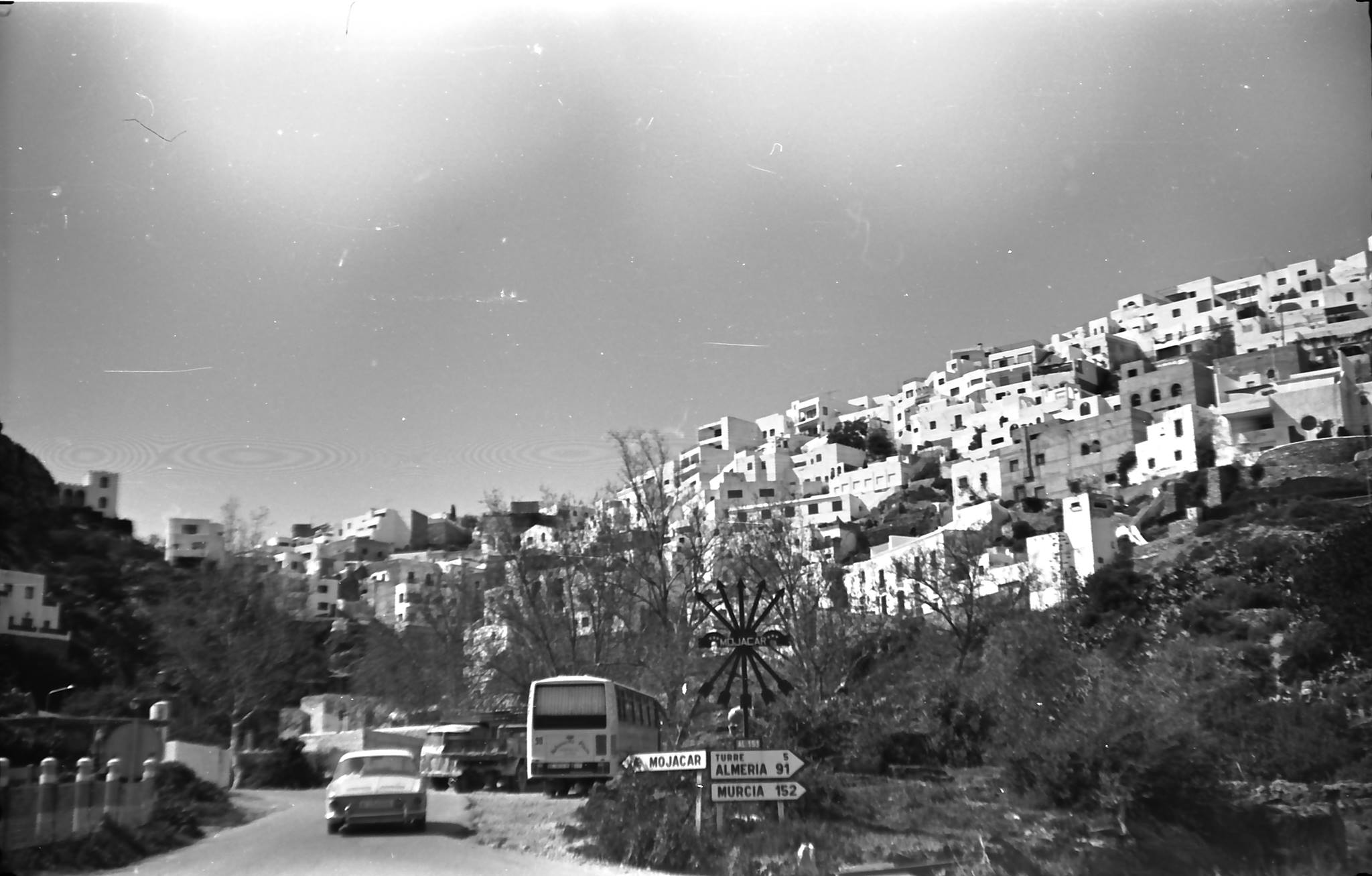
In Mojácar, there are streets named after every nation in Europe: Calle de Rumanía, Calle de Portugal, Avenida de Francia and so on. Every nation that is, except Britain, or the UK or the Reino Unido or however the hell we call the old place these days. England I might have said. Now, despite about 40% of the entire population being sons of the accursed Albion, it seems they don't deserve a street. Not even a little alleyway. Not even, just for a few short months, between the nomination of the new president of the diputación or something.
 
There are also no streets honouring the foreigners who 'discovered' or 'brought back from the brink' the small and humble resort. Well, there was one - Pete Pages (a short, fat and merry 'antique' dealer from Brooklyn) put up a sign in the narrow lane next to his shop about forty-five years ago for 'Calle de Pedro Barato'. Cheap Pete street. The current mayoress, not known for her love towards the foreigners, recently changed the name (much to the confusion of the Google Map people) to the prosaic 'Calle Cal' - Whitewash Street.
 
Actually a lane, I should point out, and far too narrow for taxis.
 
Otherwise, there's nothing there to remind the current population of the great characters who moved to Mojácar from other countries in the years gone by - bringing life, soul, a strong thirst for cheap brandy and tolerably bulging wallets.
 
Nevertheless, and to prove me wrong, everyone is currently enthused to hear of a new name change. This one is going to be for a square, the one in front of the town hall with the big tree in the middle. Come to think of it, I'm not certain it even has a name. 'Town Hall Square' or something. Anyhow, the word is that it will soon be baptized with the rather foreign-sounding 'Plaza de Walt Disney'.
 
See, despite what they might tell you in Orlando, Wally was really a mojaquero (well, you can't prove that he wasn't), so they are not breaking too many rules, beyond the one about 'good taste' perhaps. And while the town hall doesn't appear to show much interest in its foreign population, it certainly approves wholeheartedly of tourism.
 
But please, spare us a statue of Mickey Mouse.

Tipping in Spain

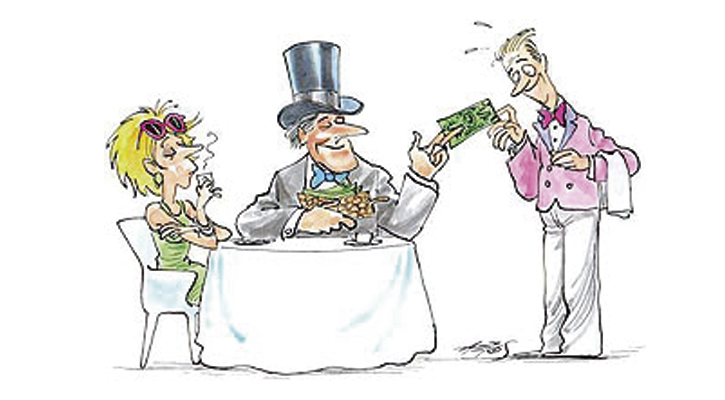
 A waiter once approached me in a club in Washington DC and held out a $100 dollar bill. ‘Your father’, he said, ‘gave me this as a tip’. My father was, you see, a bit worse for the weather after a few glasses of bourbon (and after all, all dollar bills look the same). I snatched the hundred dollars from the honest server and gave him a five-dollar bill instead.

Let that be a lesson for him.

Tipping in the USA is necessary because the wait-staff only get as little as $2.13 an hour (a preposterous amount, and apparently frozen since 1991) and they must make up the rest of their take-home earnings with tips. These are generally accepted as running at 15 to 20%. Even the credit card receipt asks you how much to add. Everyone over there seems happy enough to pay this.

In Spain, where we foreigners often wonder about the intricacies of tipping, the rules are different. To start with, the staff should be getting 10€ an hour from the owner, plus social security and time off for the odd smoke around the back. Many of the employees evidently are listed as part-time by the employer even if they’re not. Since tipping is a voluntary act rather than an institution, we sometimes do, and then again, we sometimes don’t. After all, apart from taking a photo of us on our smartphone, a waiter's main job is to stop us going into the kitchen and getting our own plate of chicken and rice off the cook.

The cheaper places don’t seem to show much interest since they’ll pass you the change from their hand to yours along with a friendly hasta la próxima – see you soon. Others, a bit more on the ball, will return your change on a small saucer. You are left with the options of either leaving it bare as you get up to go or else decorated with a bit of calderilla – pocket change. It’s never going to be more than five per cent or so.

No wait, I’m being told by an upmarket Spanish magazine that one should leave ten per cent, unless they’ve already added a gratuity to the bill. Fancy places huh!

Of course, some waiters make a decent amount of cash on the side – and no doubt neglect to declare it to the tax-man.

An article at Wiki regarding tipping in Spain says that ‘In 2007 the Minister of Economy, Pedro Solbes, blamed excessive tipping for the increase in the inflation rate’. Quite a claim! 

But let us drop into a bar in Madrid for a beer and a sardine. There, a new campaign has been launched by the conservative regional leader Isabel Díaz Ayuso, to encourage tipping – as (we read), she doesn’t want to raise the minimum wage. There’s a TV campaign to encourage the practice – a few extra coins could help the waitress pay for piano lessons for Elenita, or maybe English classes for Roberto… This remarkable commercial, called #YoDejoPropina, can be found at YouTube.

Useful if you mistakenly leave them a hundred euros…

Pulling the Plug

There's an old bath up at the stables that does for a drinking basin for the horses. It started out as an old, empty and rusted out tub with the plug 'ole missing, but a trip to the ferretería on the beach soon fixed that. For a couple of euros, half an hour's work and a skinned knuckle, plus some cementing and a bit more work, the old bath had became a handy trough.

A second trip down to the ferret to get a longer piece of hose (it was either that or move the bath somewhere nearer the tap) and all was well. The bath filled up, didn't leak, and the horses got their drink.

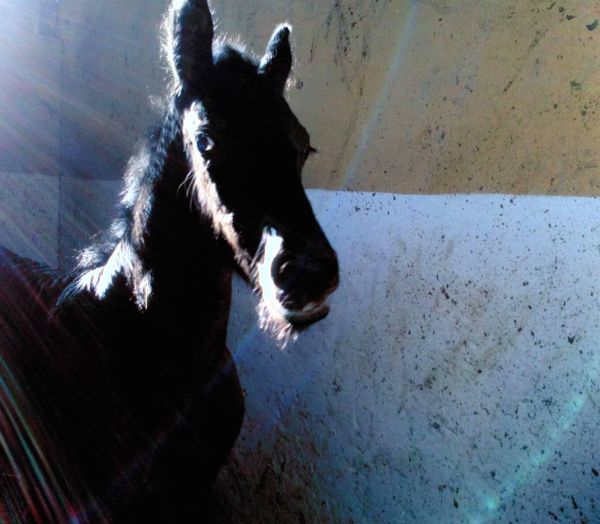
As it happens, one of the nags is a playful brute and one day, it pulled the plug out of the bath and emptied it. This meant, apart from the mess, that there was no water until someone were to come by and fix the problem. It turned out to be me and, casting about for the bung, I found a half chewed bit of hard rubber tossed under some straw, chewed and perforated too.

Back to the hardware store. Can I have another plug... this size please. The plug was flattened and hard to measure. Take a 48 and a 54 said the lady, one of them will fit.

As it happened, neither did. One was too big, the other too small. The smaller one is now in our bathroom at home, having taken over from an old and manky bung we've had for thirty years. The new one, with a shiny metal back to it, has rusted already.

So, back to the shop. Look señora, you sold me the unit, so you must have a plug that fits. No comprendo, she answered. When in doubt with angry foreigners.

Thus, to another shop. This one is the ferretería from Hell. It's a giant and wildly overstocked place where shoppers get lost. You can sometimes hear their pathetic shrieks late at night as you drive quickly past. The quality of the merchandise is highly suspect, boxes with bits missing, old stuff made in countries that no longer exist, wooden hammers that break on the first whack... and I don't like going there without a piece of string and a guide-book.

Apparently, their plugs are down in the eighth aisle, turn left, second aisle, right and right again. I eventually discover, a little later that morning, that they don't have anything except 48s and 54s either.

I went back to the first shop. Sell me another unit please, I said, with a spare plug. We've run out of units, she answered with a certain satisfaction, I think you bought the last one.

So, to the next door town and its lonely ferretería. 

The story about the horse, tee hee, and could I buy a unit with a spare bung, por favor.

Well, looky here, yes I could.

Spanish Customs, Explained

I got a letter from the Aduana today: the dreaded Spanish customs. Years ago, a fellow from Chile had sent me a sample of half a kilo of cod in a freeze-pack to see if it was worth starting a business importing Chilean fish to Spain. Anyhow, the customs got hold of it and - well, that was over twenty years ago now. I wonder if they've noticed the smell yet.

Today's letter as seen here, addressed to Lenox Naier (why can't they get our names right in Spain? F*ck me, it's not as if I'm called Rachanivarakonkul), and  dated " Mi�rcoles " (Curse those nineteen eighty computers!) is to tell me of a massive package of dubious merchandise waiting for my attention in Madrid.

The first thing I thought was 'it's a trap - they've found the fish!', but then, I saw that it had come from my daughter, who lives in foreign parts.

The package in question: a pair of sneakers for my birthday.

So, as you can see, I filled out the form, then read the back of the page to see that I need to contact our officious friends by email, sending them a scan of my silly police letter together with another of my passport (it would be a TIE these days), only their formulario doesn't allow foreigners' NIE numbers and my password -F*ckyou1- evidently wasn't long enough.

So now, I must put copies of all this in the post, being sure that they receive it before Mi�rcoles otherwise it will be 'Returned to Sender' (or more likely, destroyed in a controlled explosion or, of course more likely still, stolen).

But now I'm thinking: 'Customs, eh?' Aren't they the people who like to look through other people's stuff, rifle through steamer trunks and search diligently under the dashboard? Perhaps my box is full of Peruvian marching powder, or a rhinoceros' horn, or perhaps a pistola. So, why don't they open the f*cking thing instead of asking me for my maiden name? On the box it says 'shoes' but they may want to question this - that's why they get paid - to make the world a safer place. But why the f*ck ask me what's in the box. I'm going to say 'shoes' and they are going to say 'Ah hah! Got him!'.

In the improbable event the shoes make it though all the hoops, I will apparently be asked to pay ransom (or 'duty' as they prefer to call it) on them.

Sometimes, between all the pleasures, one forgets what a silly place we have chosen to live. 

Send Lawyers, Guns and Money


The banks aren’t what they were. The quill has been exchanged by the keyboard and now there's a button on the street-door and a trickster in the manager's office.

My first encounter with a bank was with un corredor - an agent for the Banco Popular. This was the old mayor of Bédar, who used to keep his useful papers, rubber stamp and a modest wad of cash under his bed in a strongbox. One would be granted permission to enter his boudoir and the business would be done, the mayor sat on the bed and concentrating as he filled a line in his ledger, and a receipt for the petitioner.

Word was, that the books would be transported weekly by donkey to the bank in Lúbrin, a dozen kilometres away.

Back on the coast in Mojácar, we had a proper bank, of sorts, since it wasn’t a bank so much as a savings bank, or caja. These belonged to the Church and in principle they didn’t take commissions. Ours was the Caja de Ahorros y Monte de Piedad de Almería, a kind of low-lender and pawn-shop known to the foreigners affectionately as the Cage of Horrors.

We were treated well there, and at Christmas, the Caja would fulfil tradition by offering their clients a bracer, usually a glass of anís or menta. It probably helped keep their patrons happy.

Later, allied to the Málaga Caja de Ahorros and rebranded as Unicaja, they began to offer sets of crockery to potential customers. A Sterling cheque would take a couple of weeks to clear, but if they knew you…

There was another bank of sorts in the pueblo, the Banco de Jeréz (part of the Rumasa empire), where I kept a company account. The teller, young Marcelo, used to remove a cheque from the back of my chequebook now and again and treat himself to a meal or a bottle of gin or maybe two weeks in the Caribbean until I caught him out one day. The manager returned my missing funds, kind of him, and I don’t know what happened to Marcelo. He’s probably in politics these days. The Banco de Jérez, for its part, went bust in 1992.  So, back to the Unicaja for my banking needs and its occasional welcome drop of anís.

Banks grew in numbers and employees with the building boom, which started the day Franco died and continued until 2008. Then came the ‘restructure’ when 88 different high-street banks shrank down through mergers into the ten we enjoy today, albeit with 23,500 less branches and 115,000 less employees.

As for my favoured banking option with the passage of years, the Unicaja Banco (renamed again) has now joined up with Liberbank (an operator from Asturias, Cantabria and Castilla la Mancha) and, keeping its Unicaja Banco name (sorry about that, Liberbank), has turned into something far removed from its halcyon days as a simple savings bank.

But hey, money talks. Any business one might have is not about making things, or deals, or dingbats, it’s about making money – and who is better placed to make money than a bank? Alright, the Royal Mint, but after that… No more bishops behind the door, now they are run by business-folk, or bankers as they call themselves. Indeed, bank staff are now strongly encouraged to sell products to their customers – home insurance, health insurance, house alarms (52,03€ per month with CaixaBank and don't forget to read the small print), investments, Ponzi schemes, crypto-currencies, ostrich farms, precious stones and sundry start-ups while the bank itself invests in property, bicycle teams and volleyball.

If all fails, and there’s the right government in power, then they’ll get bailed out at public expense.

Meanwhile, the Unicaja, having just raised their charges for keeping and investing my modest account to a whopping 20 euros per month, has a sign in our one remaining local office which says that the teller is only there until eleven thirty each morning, and furthermore that (says the sign with satisfaction in a piece of Newspeak) ‘Menos es Más’ - More is Less, and the handy cashpoint outside now does all kinds of tricks as the disgruntled queue to be found there will happily illustrate.   

A rival lender across town is only open two days a week (Tuesdays and Fridays). How much do they charge customers I ask?

As for mortgages - and some hard-won advice here: just don’t.

You may be wondering if my bank still offers a tipple at Christmastime to its patrons.  A flute of Bollinger maybe. I’ll get back to you on that one.  

Friday, 21 October 2022

The Potshot Kid


It must be strange living with guns. People may decide at any moment to whip them out and take a shot at you. Perhaps because they were annoyed at you, perhaps it was just in a moment of excitement. It's also true that you could decide on a whim to pull your own gun out of your holster and shoot back at them. Hell, maybe go and shoot someone else while you are in the mood.

There are indeed a few people I would like to shoot, when I think of it (and the world would be a better place for their passing) but, since I live in Spain, I don't have a gun. Being British, the best I can come up with is to shake my fist in their general direction after they have safely passed by.

This is probably for the best. The picture, by the way, is me at the cowboy film set in Tabernas. Don't worry, it's a cap-gun.

As it happens, and talking of firearms, I am soon away to visit family in far-off Texas, a place where one can easily acquire a gun from the local supermarket. Or maybe an arsenal, since they often do a special three for two service. I once asked a fellow I'm friendly with over there as to how many fire-arms he had. He answered with - 'if you know how many guns you have, you don't have enough'!

Guh-uns: he said. Two syllables.

It turned out - and this was some time ago - he had seventeen.

On that visit, I was pruriently looking one day at the guns for sale in Walmart - a sort of gigantic Carrefour. Just looking, I really didn't want one.

Anyhoo, I saw a wrist-rocket (the kind of catapult that might be used by Tom Cruise) for sale and thought that might be a good thing to get, after all, we are infested with cats at home. The salesman said I needed to show him my driver's licence, to keep everything ship-shape.

He was a bit surprised to see a Spanish one (a country that didn't appear in his computer), but we agreed that it was, in reality, a driver's licence in Spanish, so he put me down as coming from Puerto Rico. 

I never got to shoot any cats with my catapult - you see why they named it that - and I think the rubber has since perished. Maybe I'll go and buy another one while I'm there. It's going to be a long winter.

Drinkies (Mojácar 1967)


The day would start with a small libation in the plaza. Late, perhaps, but it had been a long night.

There were two bars, facing each other across the square decorated with a few mangled orange trees, a couple of old cars, several corrugated-sided Citroen vans, as often as not an orange dumper-truck - Spain’s motorized pack animal - and, when not in service, a giant Chrysler from the fifties painted egg-shell blue which served as the village taxi.

No one ever went to the smaller establishment, which sold ice-creams and was run by a succession of daughters from one of the local Families. We would instead use the old Indalo: hotel, restaurant and bar - the clubhouse, assembly room and social hub of the pueblo.


We had stayed there for several months – the price was a hundred pesetas a day for the three of us, rooms, food and drink included – when we had first arrived, and still regularly used the services of the upstairs restaurant where culture-shock and chips were served with a bottle of gritty red wine. We'd all dine there together. Tabs Parcell, the retired air vice marshal, would take his plate and put it under his shirt, next to his skin to ‘warm it’. Sammy, the flamboyant Italian-American homosexual from the merchant navy would handle the translation, under the impression that his bad ‘brooklinése’ would be comprehensible to a mojaquero waiter. Norma, another American expat, who ran an antique shop under the arch, would mutter ‘no, no’ to herself as we kept her glass filled. My dad, tall, freckled and red, known locally as ‘El langostino’, the lobster, would be sticking to whisky – he said the wine gave him gallstones. My mother, practical and in charge, would wander into the kitchen and pick up the lids on the various cauldrons to organize lunch.

The morning session, starting round about twelve, would place the small foreign community, British, French, American and a few others, around the wobbly metal tables of the Indalo, outside on the pavement, or inside, if the weather was bad, at the high marble bar. The inside bar was gloomy, dark, painted in shades of brown and stain, with a big mirror behind the bar together with a few bottles of strange cheap versions of better known brands.

Diana, a retired nanny who had taught generations of children how to say ‘please’ and ‘thank you’, appropriated the Green Fish, an unfortunately named Spanish gin, as her own. Diego, whose grand-son these days has a bar on the beach, El Rincón de Diego, where there’s a large photograph of the bar from the old Indalo, would serve his motley crowd with a suggestion of pride. At a few pesetas a drink – a very large brandy cost just a five-peseta ‘duro’ – the foreign customers soon got high-spirited and only the blistering sun managed to maintain any kind of order. Turkey Alan, a youthful cockney pick-pocket, might be telling a story about his dog, a grateful looking greyhound, or perhaps old Cicero, a pungent American professor who lived by himself and spent his money on ‘whiskey and putas’, is noisily standing a round. Tony, a friend of my dad’s, drones on about women while nobody listens and Fritz, the dapper artist with the beard and the terrible laugh, might be sketching an approximation of the party while smoking a ‘dookeedoo’, the strong local cigarette. David, a bald anthropologist who could speak several different North African languages, would be rubbing his short goatee gleefully and telling obscure and very filthy stories about his subjects in the Rif while his wife, Ursula, she of the gravelly voice, is asking me about school in a rather threatening manner as if she was seriously considering the job of ‘Matron’. Another round of drinks arrives. I take a Fanta.

Perhaps, if it was a hot day – it usually was – there would be a move towards the beach; not to swim, in particular, but rather to drink in one of the few places that existed in those days. Beach-land, traditionally inherited by the younger or dumber or less greedy members of the Families over the decades and centuries, was worth nothing. In 1967 we heard of land going for one peseta for ten metres. There were few takers.

There was one really good restaurant on the beach, however, run by French Algerians (they were known as ‘pied noirs’ and Franco smiled favourably on them). This was the Rancho del Mar, where Maxime’s quality food went for McDonald’s prices. Cheaper places, with simple menus, were the Puntazo, the Flamenco and the Virgen del Mar. Salad. Crotchmeat and chips. Sangría.

By three in the afternoon, the group would be building up again outside the Indalo. The post-office, ineptly run by Martín, who couldn’t read or write much, but spoke a bit of French, was open from three to five. I’d be sent to collect the letters, which would be passed to me with their stamps wrenched off by the old man, with the instruction to bring back the ones I couldn’t deliver, ‘…or throw them away’.

In the square, an elderly platinum blonde called Franny and her son Eddie, a semi-retired fifty-year old female impersonator, might perhaps have joined the group, both insisting on drinking Manhattans which they had long ago taught Diego how to make. Roger, who opened the first British bar, La Sartén, in 1968 could have shown up as well, together with Pop-eyed Peter (who was to run away with a mojaquera girl), Alan the Tin Miner and ‘Friggit’, a Swedish woman of doubtful morals. Giggling into his brandy, here's Chris with the long hair and moustache, a pink Mini Moke and a Danish girlfriend called Gitte. As the drinks continued, the group might have felt persuaded to sing, initially simple songs accessible to both the British and the Americans (‘I wonder whose kissing her now’, for example) followed, in the fullness of time, by numbers like ‘My Little Sister Lily’ and ‘Cats on the Rooftops’ (both also available in Spanish upon enquiry thanks to Gerry, who was meant to be studying at Granada University).

The evenings were more of the same. In La Sartén, where Roger would companionably allow you to ‘help yourself, Sport’, or the Zurri Gurri, a sensuous cave-bar run by a couple from Madrid, or the Witches Brew (captained by an American lesbian called Pat and her German friend, the scorching Rita) which also sold leather goods. Today, it’s the ‘Time and Place’.

In those far off times, when the Guardia Civil came in to a bar, conversation died. You had your papers ready. They could hand out some rough and ready justice. We were all a little worried to see them. My dad used to bribe them. ‘Have a drink with me’, he’d say and they’d have a brandy or a whisky and affably call him by his surname.

Later, after the bars closed at one, the only place open was the Pimiento, a disco run by Felipe, another pied noir. Drinks were slightly more expensive, but you could always dance to his collection of scratchy imported singles.

Far into the night, there was only one bar that had a license. It opened at four in the morning in the next-door village of Garrucha for its fishermen. Thanks to its neon lights and white tiling, it was familiarly known as ‘the Lavatory Bar’. Pedro ran it and sold carajillos - black coffee with brandy - to the fishermen and, as often as not, the same thing for the surviving foreigners. I stayed with the Fanta. As the last members of the Mojácar Jets downed their drinks and raised their voices in song, while the municipal cop looked through the door and Pedro went ‘Shhh!’, an age slowly and drunkenly made its way to its final bow.

Everything That's Runny Contains Water

I saw a billboard today while driving along the main road towards the playa on my way...